In this chapter, we will study the motion of vortices in an inviscid fluid. We will define vortex lines, which are to the vorticity field as the streamlines defined in Chapter 2 are to the velocity field. We will show that vortex lines move with the fluid and that a fluid that starts irrotational remains irrotational for all time.
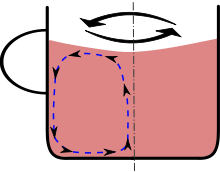
Figure6.0.3.Vortex created when a cup of tea is stirred, also showing the secondary flow that results, which in turn leads to the tea leaf paradox in which tea leaves sprinkled on the bottom of a cup migrate into a pile in the centre (you can try this at home). Credit Wikipedia.
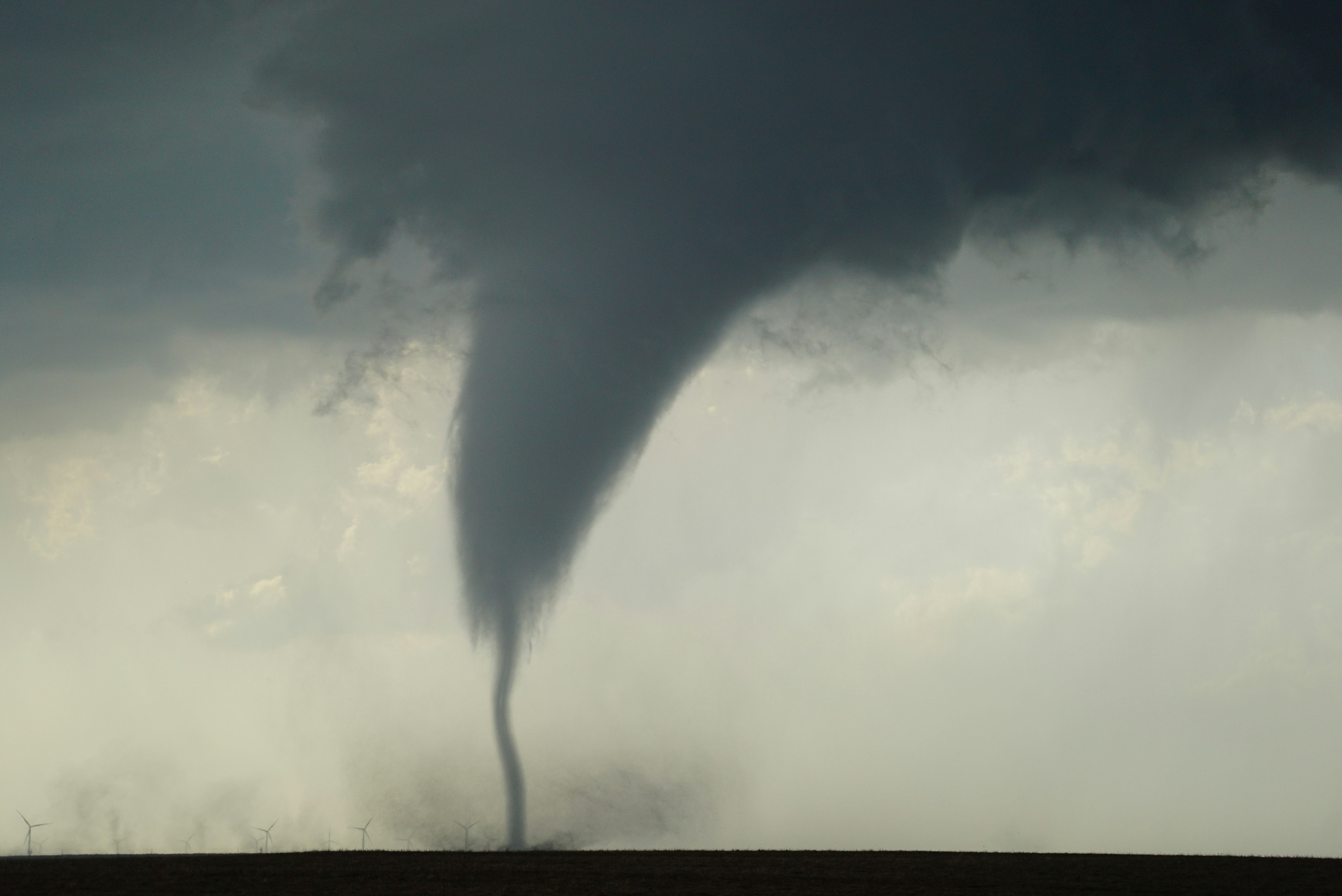
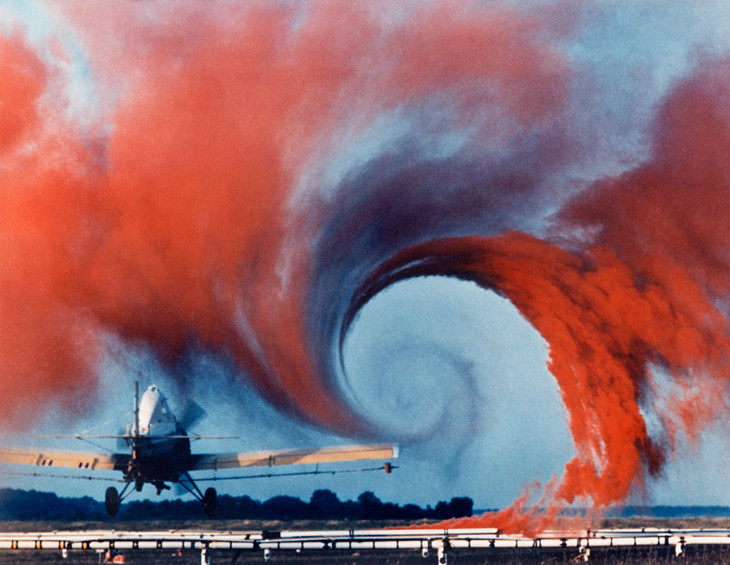
Examples of vortex motion abound in nature and industry. The most familiar examples are perhaps tornadoes and hurricanes, which are large-scale vortices in the atmosphere. Other examples include the swirling motion that forms when water drains from a bath or sink, the wake vortices that form behind aircraft wings, and the vortices that form behind a swimming fish or a flying bird. Vortices are also important in engineering applications, for example in the design of aircraft wings and turbine blades.